
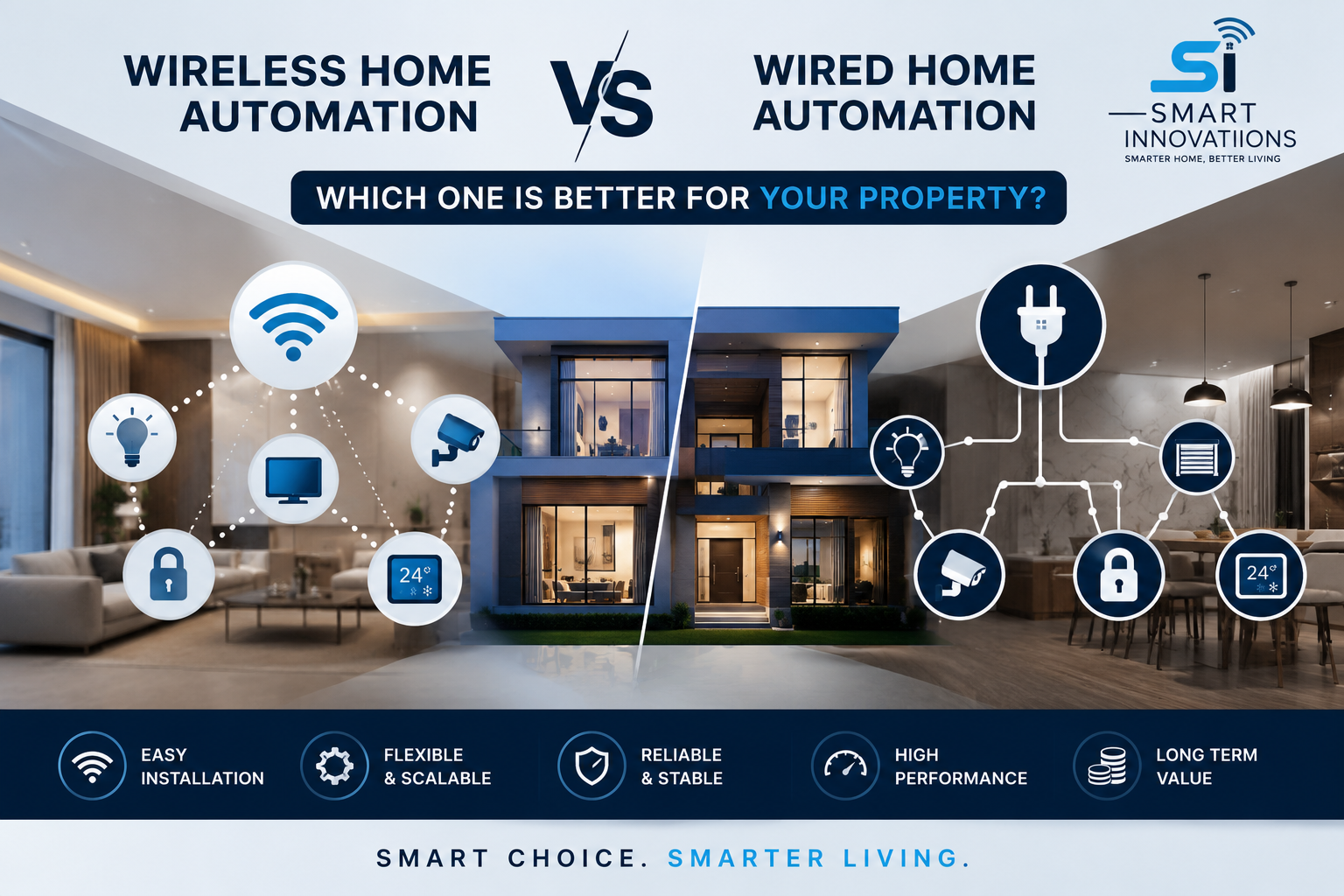
Wireless Home Automation vs Wired Home Automation: Which One Is Better for Your Property?
Choosing between wireless and wired home automation is one of the first decisions homeowners face when planning a smart home. Both technologies offer excellent functionality, but the right choice depends on your property, budget, construction stage, and future requirements.
Across New Delhi and Delhi NCR, homeowners are increasingly comparing these two options before beginning residential or commercial automation projects.
Understanding how each system works makes the decision much easier.
Understanding Wired Home Automation
A wired home automation system uses dedicated communication cables that connect switches, sensors, controllers, and smart devices throughout the building.
Because communication occurs through physical wiring, these systems are known for exceptional stability and long-term reliability.
They are commonly installed during:
- New home construction
- Major renovations
- Commercial developments
- Luxury villas
- High-end apartments
Since wiring is planned before interiors are completed, installation is generally more streamlined.
Understanding Wireless Home Automation
Wireless automation communicates through technologies such as Wi-Fi, Zigbee, Z-Wave, Bluetooth, or RF protocols instead of dedicated control cables.
This allows devices to communicate without extensive rewiring.
Wireless systems are particularly popular for:
- Existing homes
- Apartments
- Renovation projects
- Rental properties
- Smaller automation upgrades
Installation is usually quicker because walls do not need extensive modifications.
Comparing Wired and Wireless Automation
Installation
Wired Automation
- Best during construction
- Requires planning before electrical work
- Offers clean, concealed installation
Wireless Automation
- Faster installation
- Minimal disruption
- Suitable for completed homes
Reliability
Wired systems generally provide highly consistent communication because they are unaffected by wireless interference.
Wireless systems have improved significantly in recent years, but network quality and environmental conditions can influence performance.
Expansion
Wireless automation makes adding new devices relatively simple.
Wired systems can also be expanded, although additional cabling may be necessary depending on the project design.
Maintenance
Both systems require minimal maintenance when professionally installed.
Software updates and occasional device servicing are generally sufficient.
Which System Is More Secure?
Both wired and wireless solutions can offer strong security when installed correctly.
Professional automation providers implement secure communication protocols, authentication methods, and encrypted networks to help protect connected devices.
Regardless of the technology, proper system configuration remains essential.
Which Option Is Better for New Homes?
If you are building a new home, wired automation often provides greater flexibility for comprehensive integration.
It supports:
- Lighting control
- Climate management
- Security
- Audio systems
- Curtain automation
- Energy monitoring
- Centralized management
Because everything is planned during construction, future upgrades are also easier to accommodate.
Which Option Is Better for Existing Homes?
Wireless automation usually offers the greatest convenience for completed properties.
Homeowners can modernize their living spaces without significant civil work.
Common upgrades include:
- Smart lighting
- Wireless switches
- Smart plugs
- Voice-controlled appliances
- Automated curtains
- Smart security devices
This makes wireless automation particularly attractive for urban apartments throughout New Delhi.
Can Both Technologies Work Together?
Absolutely.
Many modern smart homes combine wired and wireless technologies to achieve the best balance of performance and flexibility.
For example:
- Wired lighting controls
- Wireless smart speakers
- Wired security infrastructure
- Wireless environmental sensors
Hybrid systems allow homeowners to customise automation according to their priorities rather than relying on a single technology.
Factors to Consider Before Making a Decision
Before selecting a solution, think about:
- Is your property under construction?
- Are you renovating or moving into a finished home?
- How many smart devices do you plan to install?
- Will you expand the system in the future?
- What level of customization do you require?
Answering these questions helps narrow down the most suitable approach.
Getting Expert Guidance
Every property is different, and there is rarely a one-size-fits-all solution. A professional assessment considers electrical infrastructure, architectural design, lifestyle requirements, and future expansion plans before recommending the right automation strategy.
Smart Innovatiions helps homeowners, architects, and builders across New Delhi evaluate both wired and wireless home automation systems to create solutions that align with present needs while remaining adaptable for the future.
Whether you choose wired automation, wireless automation, or a hybrid approach, the goal remains the same: creating a smarter, more efficient, and more comfortable space that enhances everyday living while supporting evolving technology for years to come.